
 Facebook
 X
 Pinterest
 Copy Link
The Portland Old House Guide, Part 4: Laurelhurst. Beautiful Homes, Curving Streets and a Park Worth Talking About
If you’ve ever driven through Laurelhurst, you probably know the feeling.
You turn down one street, then another, and before you know it you’re slowing down to get a better look at a house. Maybe it’s a beautiful Craftsman with an inviting front porch. Maybe it’s a Tudor with original details that you don’t see very often anymore. Or maybe it’s one of those larger homes that makes you wonder what the inside looks like.
There are plenty of distractions in Laurelhurst.
Beautiful old houses, mature trees, interesting architecture and, right in the middle of it all, one of Portland’s most beloved parks.
It’s a pretty easy neighborhood to fall for.
But as we’ve talked about in the first three parts of this series, buying an older Portland home means looking beyond the pretty stuff. And Laurelhurst has a few things worth understanding before you start imagining where the furniture is going.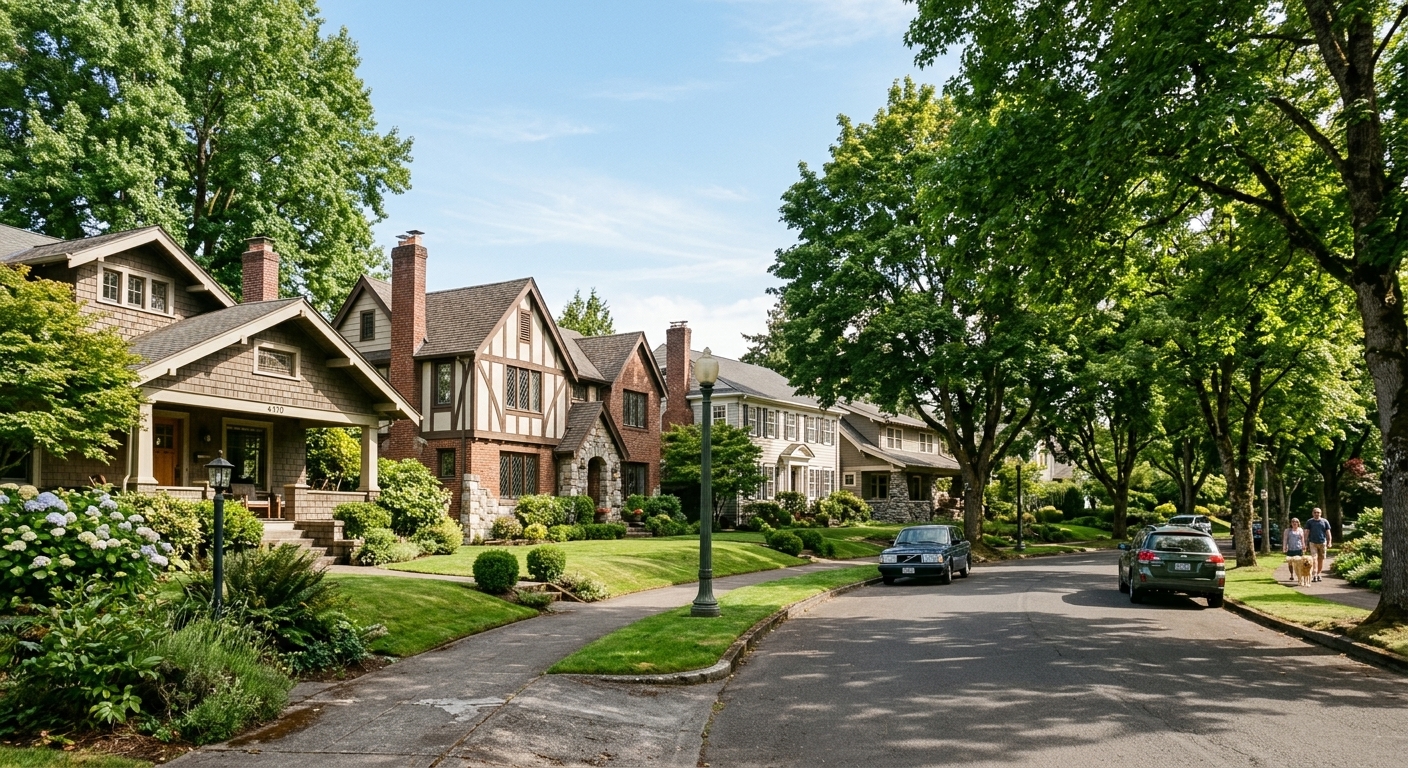
Laurelhurst wasn’t just another subdivision
One of the things I find interesting about Laurelhurst is that someone actually put a lot of thought into how the neighborhood would look and feel.
The land was once part of William S. Ladd’s Hazel Fern Farm, a 486-acre property that included a working stock farm. As Portland expanded eastward, the land became more valuable for residential development.
In 1909, the Laurelhurst Company purchased the property and brought in the Olmsted Brothers landscape architecture firm to help plan the neighborhood.
If the Olmsted name sounds familiar, you’re probably thinking of Frederick Law Olmsted, the landscape architect associated with New York’s Central Park and some of America’s most famous public spaces. His sons continued the family business as the Olmsted Brothers.
Their approach was to work with the natural landscape rather than simply lay out a grid of straight streets and square blocks.
You can still see that thinking in Laurelhurst today.
The streets curve and follow the natural contours of the land. There are circular intersections, landscaped entrances, mature street trees and views that change as you move through the neighborhood.
It feels different from many other parts of Portland, and that’s no accident.
The original plan also set aside space for a school, a park and other community uses. The idea was to create more than a place to build houses. It was to create a neighborhood where the surroundings were part of the attraction.
And that brings us to one of the biggest attractions of all.
Laurelhurst Park: A little Olmsted influence goes a long way
You really can’t talk about Laurelhurst without talking about the park.
The land was originally part of the Hazel Fern Farm estate. In 1911, the City of Portland purchased about 30 acres, including an existing spring-fed pond, with the intention of creating a neighborhood park.
Here’s another interesting connection to the Olmsted family.
The park itself wasn’t designed by Frederick Law Olmsted or his sons. That job went to Emanuel Mische, Portland’s superintendent of parks at the time. Mische had previously worked as a horticultural expert for the Olmsted Brothers, so he was very familiar with their naturalistic approach to landscape design.
He put that experience to work in 1912.
Rather than creating one big open lawn with a few paths running through it, Mische designed a series of different spaces. His plan included a concert grove, picnic areas, a children’s lawn, broad meadows, Rhododendron Hill and what became Firwood Lake.
That original spring-fed pond was deepened and expanded into a lake of about three acres.
The idea was to create a park that worked with the natural surroundings, with winding paths, different landscapes and changing views as you moved through it.
And apparently, they got it right.
In 1919, the Pacific Coast Parks Association named Laurelhurst Park the most beautiful park on the West Coast.
Not bad for a neighborhood amenity.
I think the park is a big part of what makes Laurelhurst so appealing. The landscaping, the winding streets, the architecture and the park all work together. It gives the neighborhood a character that’s pretty difficult to recreate.
And if you’ve ever taken a walk around the lake on a nice afternoon, you probably don’t need me to explain the appeal.
The houses: A little something for everyone
One of my favorite things about Laurelhurst is the variety of architecture.
You’ll find Craftsman bungalows, English Cottages, Tudor Revival homes, Colonial Revival styles and some pretty substantial houses with impressive details.
Some are relatively modest homes with great original features. Others have formal entryways, beautiful staircases, built-ins and woodwork that you just don’t see very often in newer construction.
There are also houses that have been remodeled several times over the years. Some renovations have been done beautifully. Others leave you wondering what the original architect would think of the current kitchen.
When I’m looking at an older home with a buyer, I’m not just looking at the kitchen and bathrooms. I’m looking at the things that give the house its personality.
Are the original floors still there? What happened to the windows? Are those built-ins original? Has someone removed walls or changed the floor plan? Was the remodel thoughtfully done, or did someone just keep adding things until they ran out of weekends?
This is where my design background probably shows.
I enjoy seeing how an older house was put together and figuring out what makes it work. Sometimes the best features aren’t immediately obvious when you’re walking through a property.
And sometimes the first thing I notice is something the listing photos didn’t bother to show.
Is Laurelhurst a historic district? Yes, but there’s a distinction worth knowing.
This is something buyers should understand before purchasing an older home in Laurelhurst.
The neighborhood is listed on the National Register of Historic Places. It was officially added in March 2019 after years of work by neighborhood residents.
But there’s an important difference between Laurelhurst and a City-designated Historic District like Irvington.
Laurelhurst is a National Register Historic District, not a City-designated Historic District.
What does that mean if you’re buying a house?
A National Register listing does not automatically subject every exterior remodel, addition or window replacement to the same historic design review process that applies in a City-designated Historic District.
However, demolition review can apply to certain properties within the district, particularly those identified as contributing historic resources.
So if you’re buying a property with plans to tear down the existing house and start over, this is something you absolutely need to investigate.
And even if you’re not planning anything quite that ambitious, it’s worth knowing the property’s status.
Is it contributing or non-contributing? What does Portland’s Historic Resource Inventory show? Are there any requirements that could affect your plans?
Don’t rely on the listing description or assume every property in the neighborhood is treated the same way. Check the individual property with the City before making plans.
It’s a lot easier to figure that out before you’ve hired the architect.
The practical stuff: What I’d look at before buying
Now let’s get to the part that isn’t quite as much fun as looking at the woodwork.
Older homes come with older systems. Some have been updated beautifully. Others have a few surprises waiting for the next owner.
Here’s where I’d spend some time when looking at an older Laurelhurst home.
The foundation and basement
Look for cracks, settlement, signs of water intrusion and previous repairs.
Is the basement dry? Does it smell musty? Are there signs that water has been an ongoing problem?
And if the basement has been finished, don’t automatically assume it’s legal living space. Check the permit history and understand what was actually approved.
That extra bedroom or bonus room might be useful, but it’s worth knowing exactly what you’re buying.
Plumbing and electrical
Older homes have often been updated in stages. You might find a newer electrical panel connected to older wiring, or newer plumbing connected to older supply and drain lines.
A good home inspection is important, and I’d want an inspector who is comfortable working with older homes. There’s a difference between looking at a 1920s house and looking at something built last year.
The sewer line
I’m going to keep saying this throughout the series: get a sewer scope.
Portland has plenty of older sewer lines, and tree roots can be a real issue. A sewer inspection can help identify problems that won’t show up during a standard home inspection.
It’s a relatively small expense compared with the potential cost of a sewer repair.
The roof, gutters and drainage
Those beautiful mature trees are part of what makes Laurelhurst so attractive.
They’re also responsible for leaves in the gutters, branches over the roof and roots that can affect underground pipes and surrounding hardscape.
Take a look at the roof, make sure the gutters are doing their job, and pay attention to how water moves around the property.
Water always seems to find a way into places where it isn’t invited.
Windows and original details
Original wood windows, trim, doors and built-ins can be a big part of an older home’s appeal.
Some are in great shape. Others have been neglected, painted shut or replaced over the years.
Don’t automatically assume everything needs to be replaced. Sometimes repair is the better option, both financially and aesthetically.
And before making significant changes, check the property’s historic status and any applicable requirements.
Don’t forget the permit history
This one applies to just about every older Portland home, but it’s especially worth mentioning when you’re looking at houses that have been remodeled several times.
Was that basement finished with permits?
Was the bathroom added legally?
Did someone remove a wall, add a bedroom or convert part of the garage?
A listing description can tell you what a seller believes the house offers. It doesn’t necessarily tell you what the City approved.
I’d rather have a buyer ask a few extra questions before closing than discover six months later that the project they had planned is more complicated than expected.
And if you’re thinking about buying a house because you see a lot of potential, make sure that potential is actually achievable.
My Laurelhurst buyer checklist
Before getting too far into the process, here’s what I’d want to investigate:
- Foundation, basement and any signs of water intrusion.
- Sewer line condition.
- Roof, gutters and drainage.
- Electrical and plumbing updates.
- Original windows and architectural details.
- Permit history for additions and remodeled spaces.
- Historic Resource Inventory status and whether the property is contributing.
- Any planned changes that could involve demolition or other City review.
And, of course, get a thorough inspection. No old house should be purchased on charm alone.
So, is Laurelhurst the right neighborhood for you?
Laurelhurst has a lot going for it. The architecture, the park, the mature trees and the overall character of the neighborhood make it one of Portland’s most appealing places to call home.
But buying an older home is always a little different from buying something built in the last 20 years.
You need to understand the house, what has been done to it, what still needs attention and what you can realistically expect to change.
And my old-house rule still applies:
Don’t buy the house you think you can turn it into. Buy the house you actually want to own.
The goal isn’t to find an old house with no issues. Good luck with that.
The goal is to find one with the right combination of character, condition, location and potential, and to know what you’re getting into before you get the keys.
That’s what makes the hunt interesting.
Coming up in Part 5: Historic vs. Old. What’s the Difference?
Because in Portland, those two things aren’t necessarily the same.
