
 Facebook
 X
 Pinterest
 Copy Link
I have a confession. I’m a little partial to old houses.
I live in a 115-year-old Portland Craftsman in Irvington. So I’m not just writing about older homes from the perspective of a real estate broker. I get to live with one every day.
The woodwork, the floors, the character, the things that were built to last. I love all of it.
Of course, I also know that owning an old house can come with a few surprises. Sometimes they’re charming. Sometimes they’re expensive. And occasionally you find yourself wondering what the previous owner was thinking.
But here’s a question that comes up pretty often when buyers start looking at older homes in Portland:
What’s the difference between an old house and a historic house?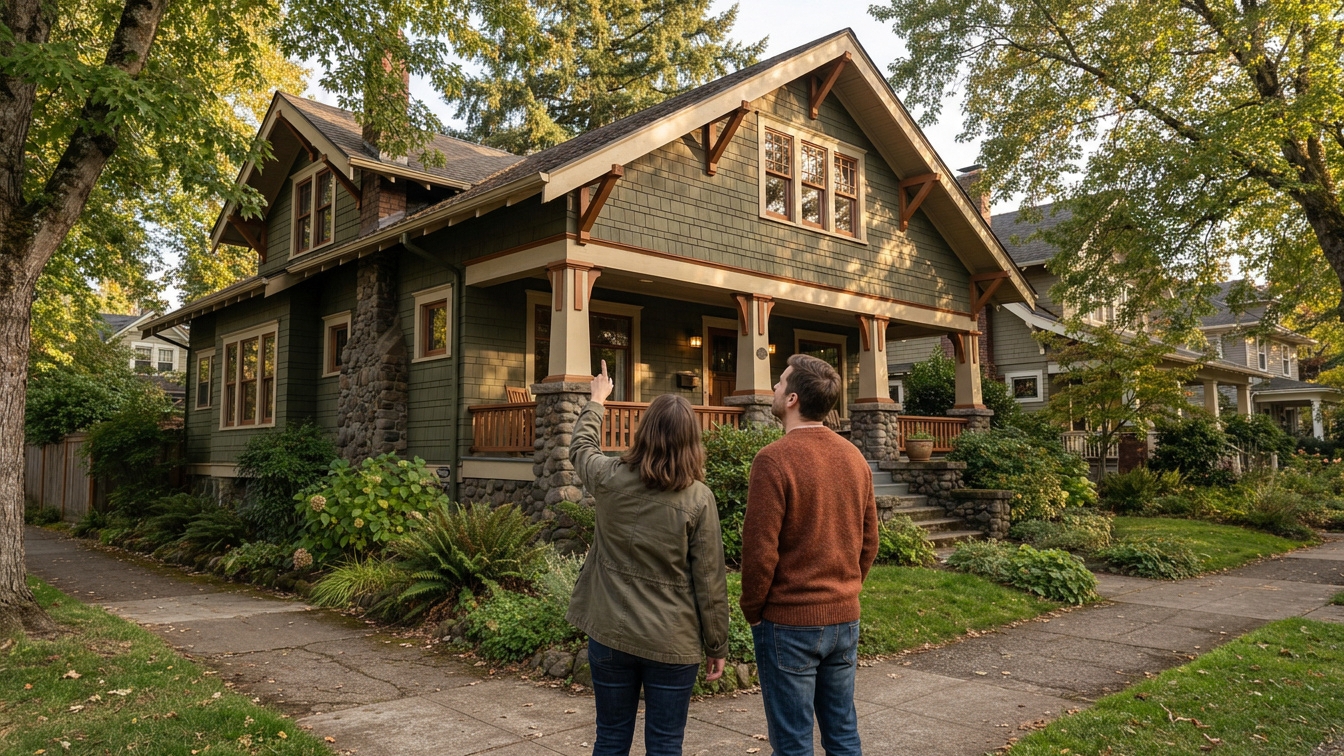
Is a 100-year-old Craftsman automatically historic? Can you remodel it? Can you replace the windows? Are you going to need permission to paint the front door?
And does buying a historic home mean you’ll spend the rest of your life filling out paperwork just to change a light fixture?
Not quite.
The words old and historic get tossed around pretty casually in real estate listings. But they don’t necessarily mean the same thing. And if you’re buying an older Portland home, it’s worth understanding the difference before you start planning that dream renovation.
First things first. Old doesn’t automatically mean historic.
A house can be 100 years old and have no formal historic designation.
It might have beautiful original details, be part of a well-known Portland neighborhood, or have a pretty interesting history. But age alone doesn’t automatically make it a designated historic resource.
Think about it this way. There are plenty of houses built in the 1920s throughout Portland. Some are located in historic districts. Others aren’t. Some have been beautifully preserved, while others have been remodeled so many times that the original architect might have trouble recognizing them.
The age of the house is only part of the story.
What matters is whether the property has a formal designation or is subject to specific historic preservation rules.
And this is where things can get a little confusing.
Portland has a few different kinds of historic designations
If you’ve been looking at homes in Irvington, Laurelhurst or some of Portland’s other older neighborhoods, you’ve probably come across terms like Historic District, National Register and Historic Resource Inventory.
They sound similar, but they don’t all mean the same thing.
Here’s the simple version.
1. City-designated Historic Districts
Let’s start with a neighborhood I know pretty well.
Irvington.
I’ve lived here since 2004, and one of the things that makes the neighborhood special is its collection of older homes. Craftsman bungalows, Queen Annes, Tudors, beautiful porches, original woodwork. There’s a lot to appreciate.
Irvington is a City-designated Historic District.
That means certain exterior changes, additions and new construction can require historic design review. The goal is to preserve the architectural character that makes the neighborhood special.
Does that mean you can’t remodel your house? No.
It means there may be some additional considerations before you start changing things on the outside.
And depending on the property and the project, the review process can make a difference in what you can do.
I can tell you from personal experience that living in an old Craftsman doesn’t mean you have to turn your house into a museum. You just need to understand the rules before making plans.
2. National Register Historic Districts
Now let’s head over to Laurelhurst.
Laurelhurst is listed on the National Register of Historic Places, but it is not a City-designated Historic District like Irvington.
So what’s the difference?
The National Register is a federal program that recognizes places with historic or architectural significance.
Being listed on the National Register by itself does not automatically mean that every exterior remodel, addition or window replacement requires the same historic design review that applies in a City-designated Historic District.
However, Portland does have local rules that can apply to certain properties within National Register districts. For example, demolition review can apply to contributing properties.
So if you’re looking at a Laurelhurst home and thinking, “Maybe I’ll just tear this down and build something new,” you’ll want to check that idea before you get too far along.
And even if you’re not planning anything quite that ambitious, it’s worth understanding the property’s status.
3. Portland’s Historic Resource Inventory
You may also come across something called the Historic Resource Inventory, or HRI.
Think of it as a collection of information about buildings and places that have been identified as having historic significance or potential historic value.
Some properties in the inventory are formally designated. Others have been documented but don’t necessarily have the same protections.
Here’s the important part: just because a house appears in the Historic Resource Inventory doesn’t automatically mean you can’t change it.
You need to understand how the property is classified and whether any specific regulations apply.
It’s a good place to start your research, but don’t stop there.
Contributing or non-contributing? What’s that all about?
If you’re looking at a home in a historic district, you may see it described as either contributing or non-contributing.
A contributing property helps tell the historic story of the district. Generally, it dates from the period when the neighborhood was developed and retains enough of its original character to contribute to the district’s significance.
A non-contributing property may have been built outside that period, or it may have been altered enough that it no longer contributes in the same way.
But here’s where I want buyers to pay attention.
Non-contributing does not necessarily mean you can do whatever you want.
There may still be rules that apply to the property or the proposed work. It depends on the type of designation and what you’re planning to do.
So don’t just look at the label and assume you’ve got a free pass.
Find out what it actually means for the house you’re considering.
So, can you remodel a historic home?
In most cases, the answer is yes. But the type of work and the property’s designation matter.
Maybe you want to remodel the kitchen. Maybe you’re thinking about replacing the windows, adding a bathroom, building an addition or making some changes to the exterior.
Some projects may be relatively straightforward. Others may require review and approval before you can get started.
And sometimes it’s not necessarily a question of whether you can make a change, but how you make it.
For example, repairing an original wood window is different from replacing it. Restoring original exterior siding is different from removing it and installing something completely new.
This is where a little research can save you a lot of time and frustration.
I always recommend checking the property’s historic status and talking with the City before making renovation plans.
It’s much easier to find out what’s possible before you’ve hired an architect, called three contractors and started shopping for materials.
And if you’re buying a house because you see a lot of potential, make sure that potential is actually achievable.
What should you check before buying?
If you’re considering an older Portland home, here’s where I’d start.
Look up the property.
PortlandMaps is a good starting point. You can also check the City’s Historic Resource Inventory to see whether the property is listed or located within a historic district.
Find out what kind of designation it has.
City-designated Historic District, National Register Historic District, individual landmark and Historic Resource Inventory are not interchangeable terms.
Check whether it’s contributing or non-contributing.
If the property is in a district, that classification may affect which rules apply.
Think about what you want to change.
“Can I remodel this house?” is a pretty big question.
“Can I replace these windows?” or “Can I add a second story?” gives you something specific to investigate.
Check with the City.
Portland’s historic resource information is a good starting point, but if you have a specific project in mind, contact Portland Permitting & Development to understand what review may be required.
And don’t forget the permit history. A beautiful remodel doesn’t automatically mean every part of it was permitted.
A little perspective from someone who lives in an old house
I think there’s a lot to love about Portland’s older homes.
The craftsmanship, the original floors, the built-ins, the windows, the porches and all those little details that give a house its personality.
But I also think buyers sometimes get a little intimidated when they hear the word historic.
It sounds like a lot of restrictions and red tape. And sometimes there are additional requirements to deal with. But that doesn’t mean you should automatically cross a historic home off your list.
Likewise, don’t assume that a house advertised as historic comes with some kind of official designation.
I’ve spent plenty of time looking at older homes with buyers, and one thing I’ve learned is that every house has its own story. Some have been beautifully maintained. Some have been remodeled thoughtfully. Others have a few chapters that are best left unexplored until after the inspection.
The trick is knowing what you’re buying. The bottom line
An old house can be wonderful without being formally designated historic. And a historic designation doesn’t automatically mean you can’t make changes.
But you do need to know the difference.
Whether you’re looking in Irvington, Laurelhurst, Alameda or somewhere else in Portland, check the specific property, understand its designation and find out what rules apply before you start making plans.
And my old-house rule still applies:
Don’t buy the house you think you can turn it into. Buy the house you actually want to own.
Especially if it’s 100 years old. There’s a pretty good chance it’s already been through a few changes of its own.
Coming up in Part 6: The Inspection List for an Old Portland House.
Because falling in love with the house is the fun part. Finding out what’s behind the walls is where things get interesting.
